Mendon, NY · Mold Removal
Mold Removal Mendon NY: Black Mold Removal Mendon NY
Have you found dark spots on basement walls, noticed a musty smell near the attic, or discovered mold after a plumbing leak in your Mendon home? Mold should not be ignored, especially when moisture is still present. Visible growth may be only part of the problem, and wiping the surface without correcting the water source can allow it to return.
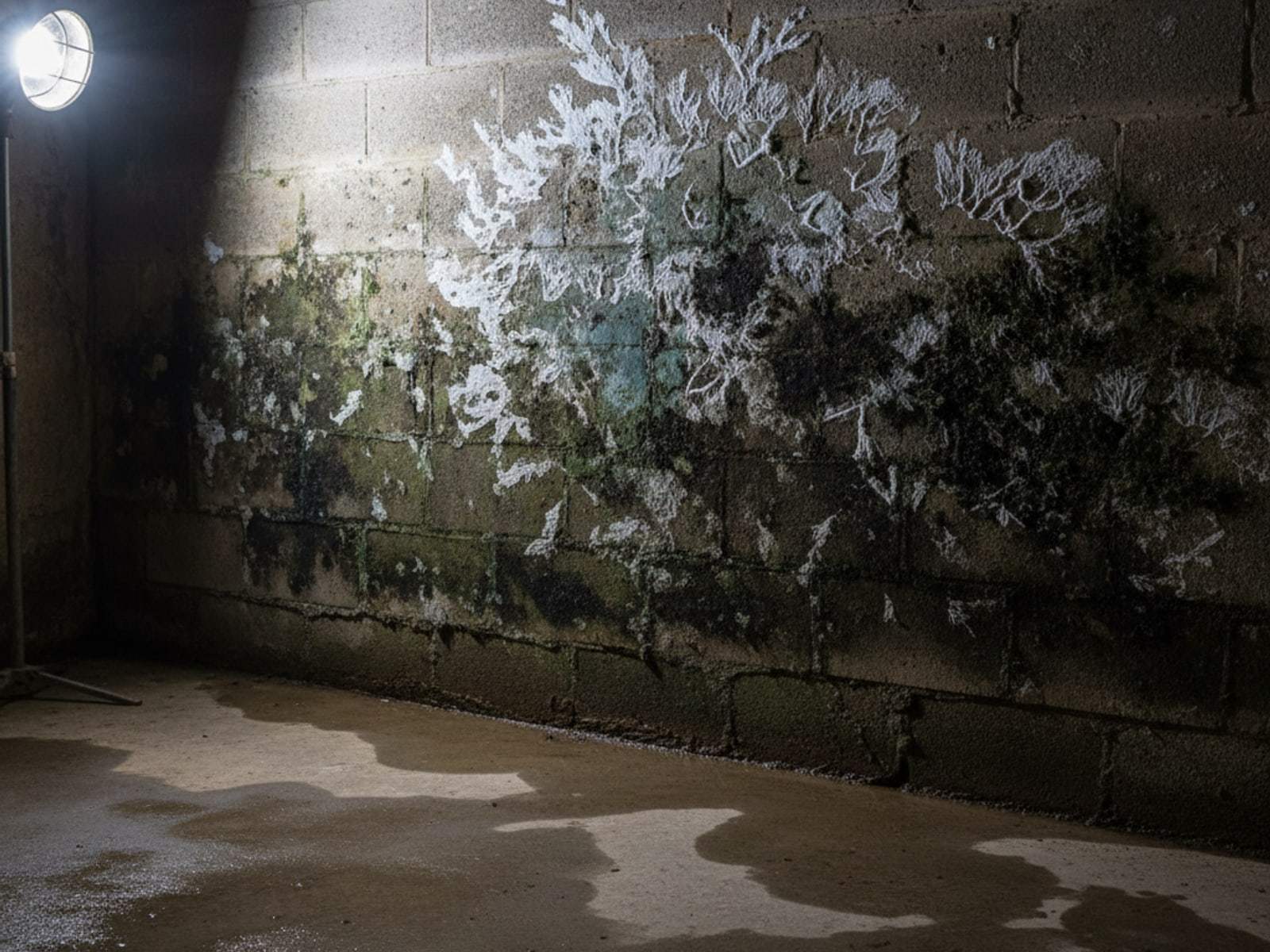
- Mold & black mold inspection
- Testing
- Containment & HEPA
- Removal & drying
Attic Mold Removal Rochester Pros provides professional mold removal, mold remediation, mold inspections, moisture assessments, and related attic, basement, and crawlspace services in Mendon, NY.
Attic Mold Removal Rochester Pros also provides black mold inspections, testing, removal, and remediation for Mendon, NY homes. If you find dark growth after a leak, flooding, condensation, or a musty odor, schedule an assessment before scraping, painting, or vacuuming the material. A professional plan should address the contamination and the moisture source together.
Call to schedule an inspection, request an assessment, or ask for a written estimate. The right first step depends on the size of the affected area, the materials involved, and whether the source is a current leak, condensation, drainage issue, or past water event.
Mold removal versus mold remediation
Mold removal usually refers to physically removing mold-contaminated materials or cleaning mold from suitable surfaces. Mold remediation is broader. It includes:
- Identifying the moisture source.
- Containing the affected area.
- Removing unsalvageable materials.
- Cleaning remaining structural surfaces.
- Drying the property.
- Correcting ventilation or drainage problems.
- Verifying that the work is complete.
A professional solution should address the reason mold developed, not just the visible staining.
What “Black Mold” Means
Dark mold on a basement wall, attic rafter, bathroom ceiling, or piece of insulation can be unsettling. Homeowners often call it “black mold,” but color alone cannot identify the species or determine the health risk. The important questions are where the growth is located, how much is present, what material it affects, and why the area stayed damp.
Several kinds of mold may look black, dark green, brown, or gray. A visual inspection cannot reliably identify a species. Laboratory testing may help determine what was found in a sample, but the need for cleanup depends primarily on the physical contamination and moisture conditions.
Testing may be useful when:
- The type of mold matters for documentation.
- The growth is hidden.
- A musty odor has no visible source.
- You are buying or selling.
- Insurance documentation is needed.
- HVAC contamination is suspected.
- Clearance testing is requested.
Regardless of species, visible mold and damp materials should be evaluated.
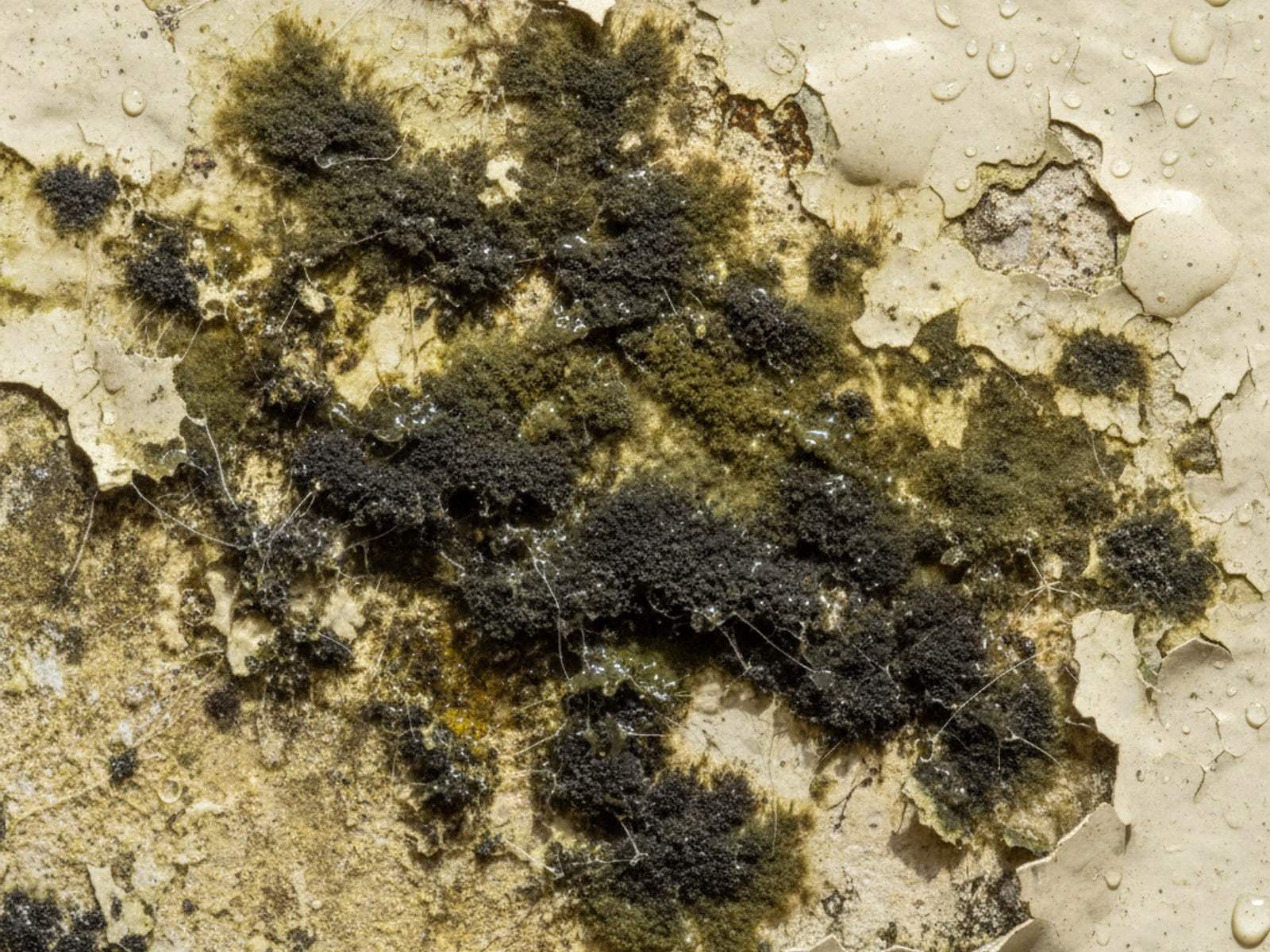
Common mold locations in Mendon homes
Mendon properties include older homes, remodeled residences, newer construction, finished basements, attached garages, crawlspaces, and attic areas with varying ventilation designs. Mold can develop wherever moisture remains available.
Common locations include:
- Basement walls and floors.
- Finished basement drywall.
- Crawlspaces.
- Attic insulation and roof sheathing.
- Around plumbing supply lines.
- Under sinks and behind cabinets.
- Bathroom ceilings and walls.
- Window trim.
- Laundry rooms.
- Around foundation cracks.
- HVAC or ductwork areas.
- Carpet and padding after water damage.
Homes near wooded areas, low-lying drainage zones, or properties with aging gutters may require particular attention to groundwater, runoff, and foundation moisture. That does not mean every Mendon property has the same risk; a site inspection is needed to identify the actual cause.
Signs you may need mold removal
Schedule a professional inspection if you notice:
- A persistent musty or earthy odor.
- Dark, green, gray, or white patches.
- Water stains or discoloration.
- Peeling paint or wallpaper.
- Damp insulation.
- Soft or swollen drywall.
- Condensation on windows or pipes.
- Recurring basement humidity.
- Mold after a roof or plumbing leak.
- Symptoms that improve when you leave the house.
Mold exposure can contribute to allergy and irritation symptoms in some people. New York State lists congestion, eye irritation, wheezing, coughing, throat irritation, skin irritation, and headaches among possible effects, while noting that sensitivity varies and symptoms can have other causes.
People with asthma, allergies, chronic lung conditions, compromised immune systems, young children, and older adults should avoid entering heavily contaminated spaces. Health concerns should be discussed with a medical professional.
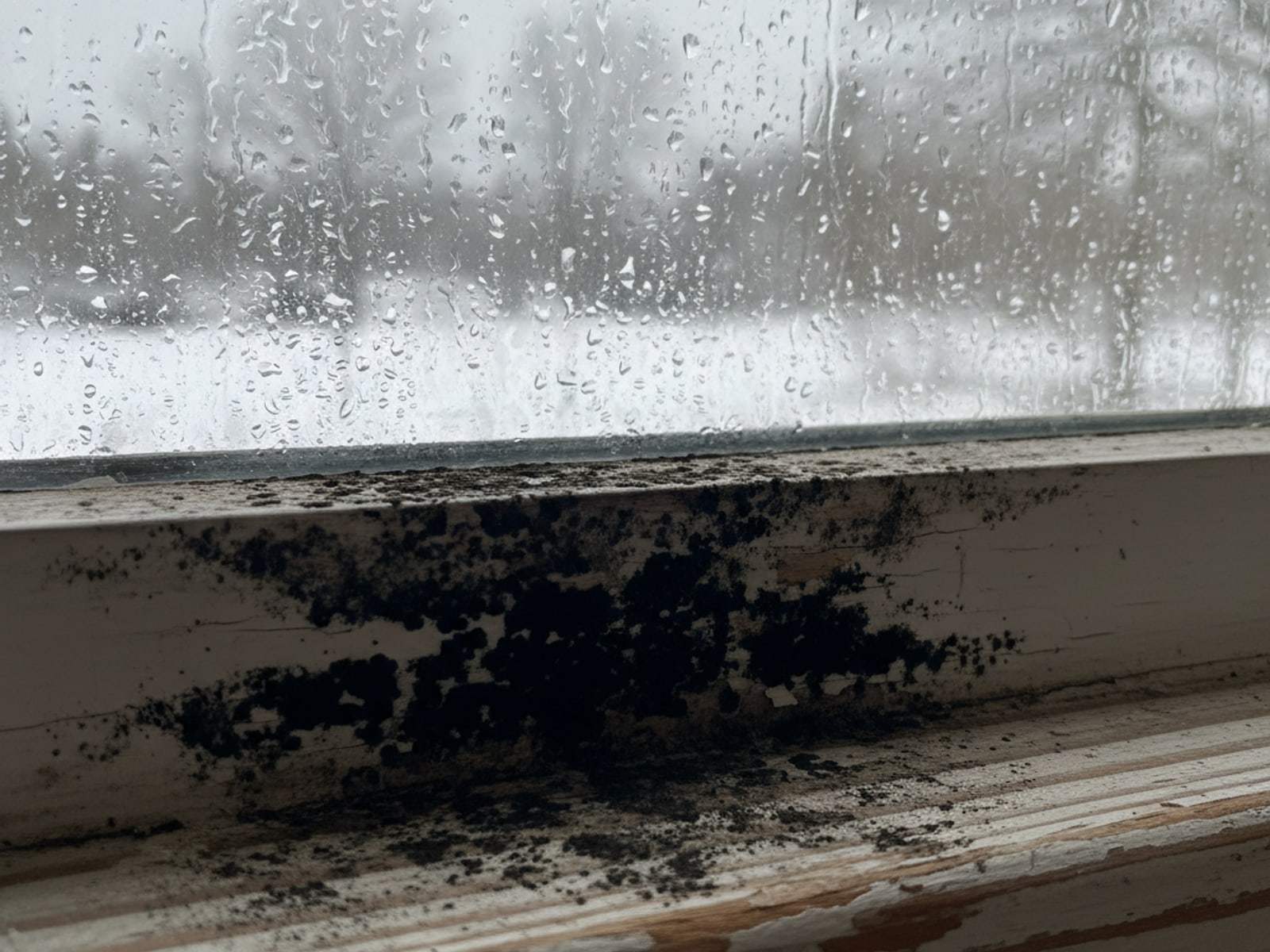
Health and Exposure Precautions
Some people may experience nasal irritation, coughing, wheezing, eye irritation, skin reactions, or worsening asthma in damp or moldy environments. The CDC notes that people with asthma or mold allergies may have more severe reactions.
Mold exposure does not prove that a person’s symptoms have a specific cause. Medical questions should be addressed by a healthcare provider.
Sensitive occupants should stay away from the affected area, including:
- Infants and young children.
- People with asthma.
- People with mold allergies.
- Older adults.
- Individuals with weakened immune systems.
- People with chronic lung conditions.
Appropriate PPE for mold work may include an N95 respirator, gloves, safety goggles, disposable coveralls, and shoe protection. PPE alone does not replace containment and proper removal procedures.
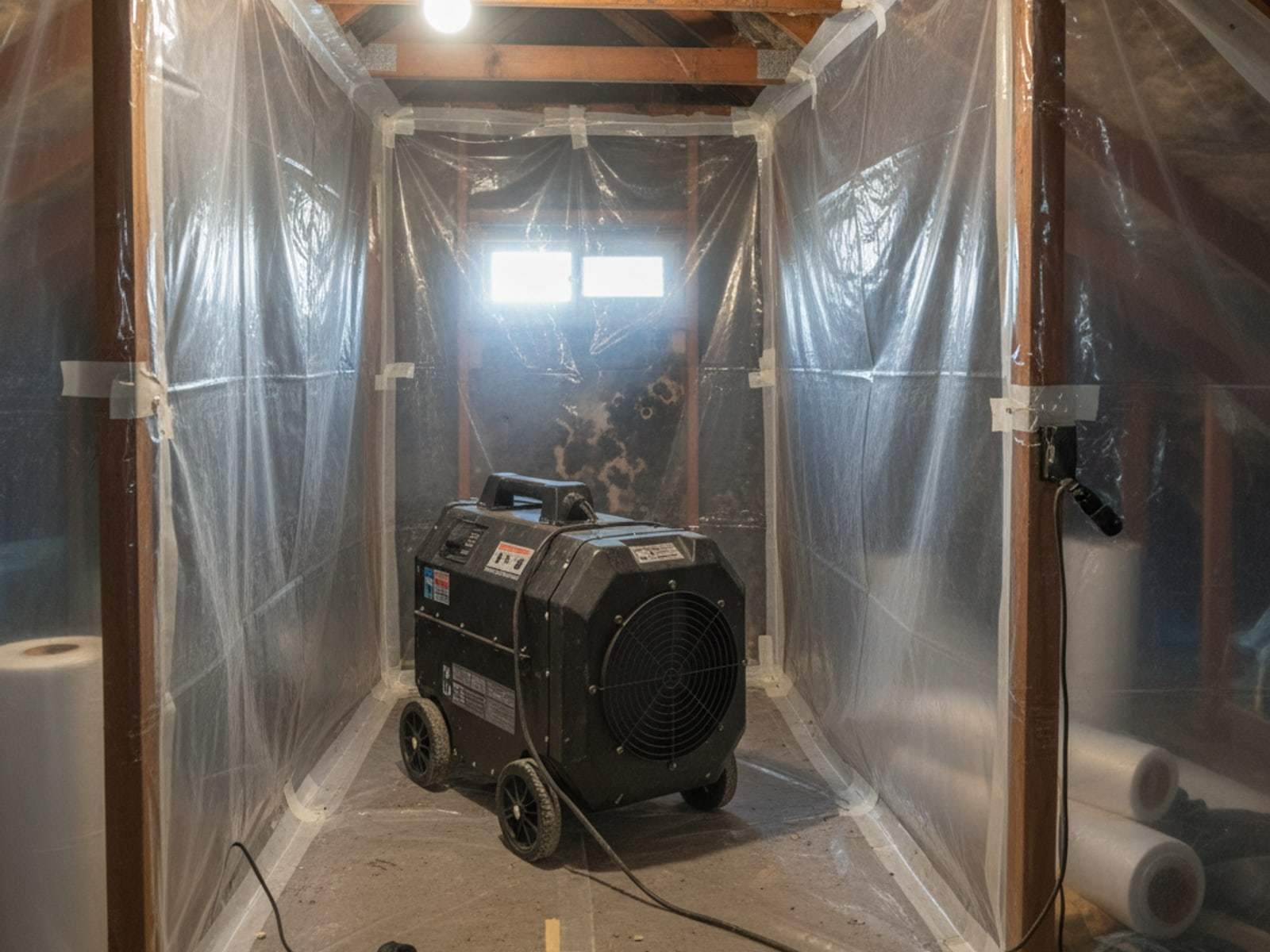
Causes of mold growth
Mold spores are common indoors and outdoors. They become a property problem when moisture and suitable organic material remain together.
Common causes include:
- Foundation seepage.
- Poor grading around the home.
- Blocked or short downspouts.
- Roof leaks.
- Ice-dam water intrusion.
- Plumbing leaks.
- Appliance failures.
- Condensation on cold surfaces.
- High indoor humidity.
- Bathroom fans venting poorly.
- Wet basement storage.
- Damp crawlspace soil.
- Flooding or storm damage.
New York State recommends identifying and correcting the source of water or dampness before cleaning mold.
Mold inspection and testing
A mold inspection evaluates the building and looks for visible growth, moisture, damaged materials, and conditions that support mold. Testing collects air, surface, or bulk samples for laboratory analysis.
Testing may be useful when:
- Mold is suspected but not visible.
- A musty odor has no obvious source.
- A home is being bought or sold.
- Occupants report possible mold-related irritation.
- HVAC contamination is a concern.
- You need documentation for an insurance claim.
- Post-remediation clearance is requested.
Testing is not always necessary for a small visible area. In many cases, correcting the moisture source and removing or cleaning the affected material are more important than identifying the exact species.
The Mendon mold removal process
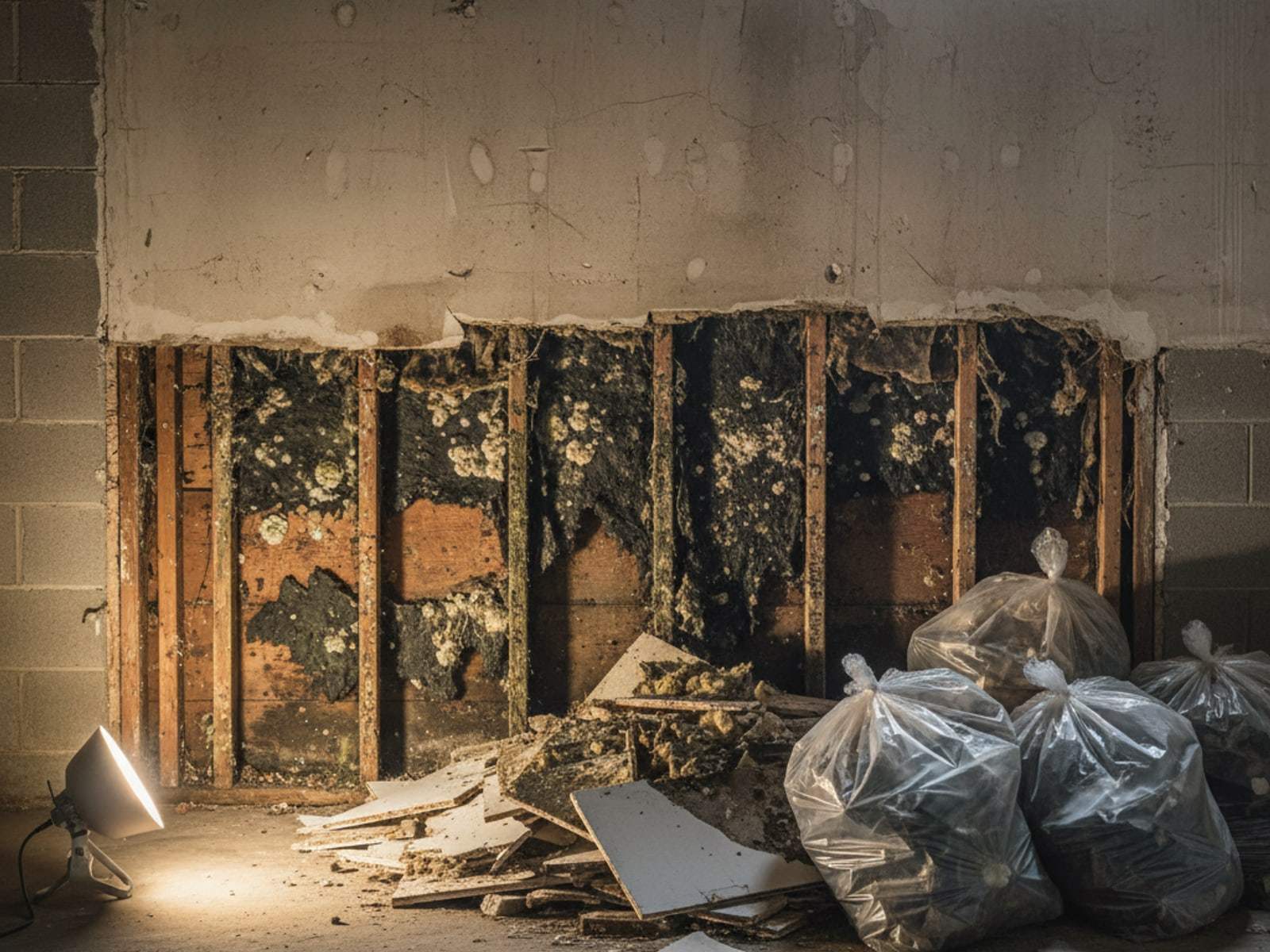
-
Inspection
The property is evaluated for visible mold, odor, moisture, water damage, ventilation, and affected materials.
-
Moisture investigation
Moisture meters, visual inspection, and infrared tools may help identify damp areas behind surfaces or beneath insulation.
-
Scope of work
The recommended scope should explain containment, material removal, cleaning, drying, repairs, and any testing.
-
Containment
Plastic barriers, sealed openings, negative-air equipment, and air filtration may be used to limit movement of spores into clean parts of the home.
-
Removal
Mold-contaminated porous materials such as extensively affected drywall, insulation, carpet, or ceiling tiles may need to be removed. The EPA notes that mold can penetrate porous materials and that wet, moldy materials may need disposal.
-
Cleaning
Suitable wood, masonry, concrete, and other hard surfaces are cleaned using appropriate procedures. HEPA vacuuming may help capture settled particles after removal and drying.
-
Drying and repairs
The area must be dried thoroughly. Roof, plumbing, drainage, foundation, and ventilation problems should be corrected before rebuilding.
-
Final review
A final visual inspection, moisture check, or independent clearance assessment may be appropriate depending on the size and nature of the project.
Black Mold in Basements, Attics, and Crawlspaces
Basement mold
Mendon basements may be affected by foundation seepage, drainage problems, sump-pump failures, and condensation. Remediation may require drywall removal, masonry cleaning, dehumidification, and waterproofing coordination.
Attic mold
Roof leaks, ice dams, warm-air leakage, and poor ventilation can contaminate roof sheathing and insulation. Moldy insulation generally requires removal before cleaning and replacement.
Crawlspace mold
Crawlspaces may need vapor-barrier work, drainage improvements, dehumidification, insulation removal, and improved access before remediation.
Attic and basement services
Mold removal in Mendon often involves more than one part of the home. Related services may include:
- Attic mold inspection.
- Contaminated insulation removal.
- Replacement attic insulation.
- Attic air sealing.
- Ventilation improvements.
- Basement mold remediation.
- Crawlspace moisture control.
- Sump-pump and drainage coordination.
- Dehumidification recommendations.
- Minor drywall removal.
- Roof-leak investigation.
- HVAC-area assessment.
Insulation should not be installed over wet or mold-contaminated material. Likewise, basement walls should not be sealed or painted before active leaks and moisture conditions are addressed.
DIY Versus Professional Black Mold Removal
A homeowner may be able to clean a small area on a hard, non-porous surface after correcting the moisture source and using suitable PPE. Professional remediation is appropriate when:
- The area is extensive.
- Drywall or insulation is affected.
- The source is unknown.
- The problem returns.
- HVAC systems may be contaminated.
- Vulnerable occupants live in the property.
- The property experienced flooding.
- Documentation is needed.
Do not use a standard vacuum on visible mold. Do not paint over the growth or rely on a chemical treatment to solve wet materials.
New York licensing considerations
New York’s Department of Labor regulates mold assessment and remediation under Article 32. The state requires appropriate licensing for covered mold work and establishes minimum standards, including independent assessment, personal protective equipment, work documentation, and post-remediation assessment.
For a larger project, homeowners should ask who is performing the assessment, who is performing remediation, whether the entities are independent, and how current license information can be verified through the state’s mold contractor search.
How much does mold removal cost in Mendon?
| Service | Typical planning range |
|---|---|
| Mold inspection | $250 to $500 |
| Mold testing | $300 to $1,200 |
| Small surface cleanup | $500 to $1,500 |
| Single-room remediation | $1,200 to $3,800 |
| Basement remediation | $1,800 to $6,000 |
| Attic mold removal | $1,500 to $6,000+ |
| Crawlspace remediation | $1,500 to $5,000 |
| Clearance testing | $400 to $900 |
The final price depends on the affected area, demolition, containment, access, disposal, drying, repairs, testing, and rebuilding.
Black mold removal cost in Mendon
| Black mold service | Typical planning range |
|---|---|
| Mold inspection | $300 to $700 |
| Mold testing | $300 to $1,200 |
| Small contained cleanup | $700 to $2,000 |
| Single-room remediation | $1,500 to $5,500 |
| Basement remediation | $1,800 to $6,500 |
| Attic mold removal | $1,500 to $6,000+ |
| Crawlspace remediation | $1,500 to $4,500 |
| Clearance testing | $400 to $900 |
The final price depends on contamination size, access, material removal, containment, disposal, drying, source repairs, and testing.
Why choose Attic Mold Removal Rochester Pros?
Attic Mold Removal Rochester Pros presents mold work as a moisture-control and building-care project rather than a quick chemical treatment. The service approach focuses on:
- Finding the moisture source.
- Protecting unaffected areas.
- Removing contaminated materials safely.
- Cleaning appropriate surfaces.
- Coordinating related insulation or repair work.
- Providing a clear scope before work begins.
Frequently asked questions
Do I need mold testing before removal?
Not always. Visible mold and obvious water damage may be enough to begin corrective work. Testing can be useful when the source or extent is unclear, for real-estate documentation, or when clearance is requested.
Can I remove a small amount of mold myself?
A small amount on a hard, non-porous surface may be manageable after correcting the moisture source and using gloves, eye protection, and an appropriate respirator. Larger areas, porous materials, HVAC contamination, and sensitive occupants call for professional help.
Will mold return after removal?
It can return if leaks, condensation, humidity, or drainage problems remain. Moisture correction is a necessary part of lasting remediation.
How long does remediation take?
A small project may take one to three days. Larger projects involving containment, demolition, drying, insulation replacement, or reconstruction may take longer.
Does homeowners insurance cover mold?
Coverage depends on the policy and cause. Mold resulting from a covered sudden water event may be treated differently from long-term seepage, flooding, or maintenance-related moisture. Document the damage and contact your insurer promptly.
Is all black-looking mold toxic?
No. Color does not establish species or toxicity. Any extensive mold growth should still be assessed and addressed.
Can I remove black mold with bleach?
Bleach is not a universal solution, especially for porous materials. Do not mix cleaning chemicals, and seek professional help for extensive contamination.
Will black mold come back?
It may return if moisture remains or a new leak develops. The source must be corrected for long-term control.
Mendon, NY
Schedule Mendon Mold and Black Mold Removal
If you see mold or dark black mold, smell mustiness, or find unexplained moisture in your Mendon property, contact Attic Mold Removal Rochester Pros to schedule an inspection or request an assessment.